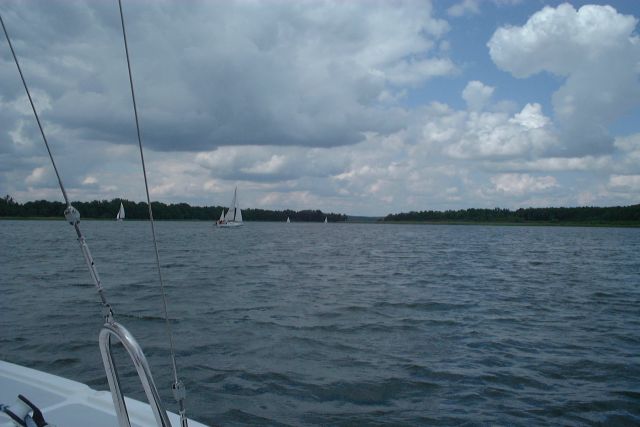
The Masurian Lake District (Mazury)
The Masurian Lake District, known in Polish as Mazury, covers the northeastern part of the Warmia-Masuria voivodeship. The area includes over 2,000 lakes of various sizes connected by rivers and man-made channels, forming one of the largest navigable freshwater systems in Europe available for private use without a sea passage.
Geography and Navigation
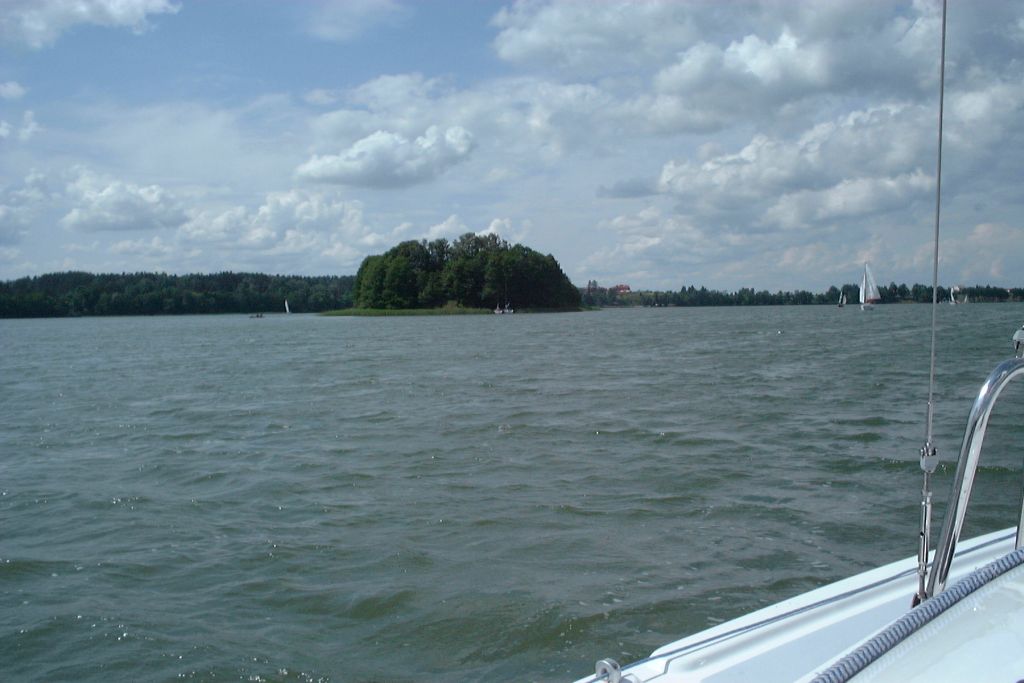
The main cruising circuit used by most visiting yachts centres on the Great Masurian Lakes (Wielkie Jeziora Mazurskie), a connected chain that includes lakes Śniardwy, Mamry, Niegocin, Tałty, and several smaller ones. This loop can be sailed in a week at a relaxed pace, with stops at towns including Giżycko, Mikołajki, Ryn, and Węgorzewo. Longer routes extend into smaller lakes and narrower river sections where mast-up navigation is not always possible.
The channel depths on the main circuit are generally sufficient for keelboats drawing up to 1.4–1.6 metres, though this should be verified with current charts from the Polish Yachting Association or local marina staff before passage. Depths can change after dredging or seasonal water level variation.
Wind Patterns
The Masurian lakes lie in an area of relatively flat terrain, which means wind can build quickly across open water without topographical shelter. Afternoon thunderstorms are common in summer, particularly in July and August. Sailors unfamiliar with the region should monitor VHF weather broadcasts and local forecasts before extended passages. The storms can be intense but are typically short-lived.
Marinas and Infrastructure
The Masurian region has an established network of marinas and quayside stops. Giżycko is the largest town on the circuit and has multiple marinas with fuel, water, shore power, and repair facilities. Mikołajki is smaller but similarly well-equipped and tends to be busy throughout summer. Many smaller quays exist in quieter locations for overnight stops without full facilities.
Boat hire is available from multiple operators in Giżycko, Mrągowo, and Mikołajki. Certification requirements for bareboat hire depend on the boat size; boats over 7.5 metres require a Polish or internationally recognised sailing qualification. Charter operators can advise on current requirements.
The sailing season on the Masurian Lakes runs approximately from May to September. The peak period is July–August, when marinas and popular anchorages fill early in the afternoon. Arriving by midday is advisable during high season to secure a berth.
Lake Solina (Jezioro Solińskie)
Lake Solina is a reservoir in the Bieszczady mountains of southeastern Poland, formed by a dam on the San River completed in the 1960s. It is the largest reservoir in Poland by volume and one of the most elevated sailing destinations in the country, surrounded by forested hills at roughly 400 metres above sea level.

Sailing Conditions
The open central basin of Lake Solina is wide enough for comfortable sailing. Afternoon thermal winds develop regularly across the water due to the temperature differential between the forested hills and the open lake surface. These can be reliable for afternoon sailing in summer but can also build quickly; the enclosed nature of the surrounding terrain means seas can become short and steep in sustained wind.
The lake's irregular shoreline creates a number of smaller bays and inlets that offer shelter. Navigation near the shore requires attention to submerged features — the reservoir was formed by flooding farmland and villages, and some remnant structures exist at depth near the margins.
Access and Facilities
The main sailing base on Lake Solina is at Polańczyk, a resort town on the western shore. Several marinas and boat hire operators are based here. The nearest large town with transport connections is Lesko, approximately 10 kilometres from the lake. The Bieszczady region is less populated than the Masurian Lakes area, and marina infrastructure is more limited; arriving with adequate provisions and fuel is advisable for extended stays.
Lake Wigry (Jezioro Wigry)
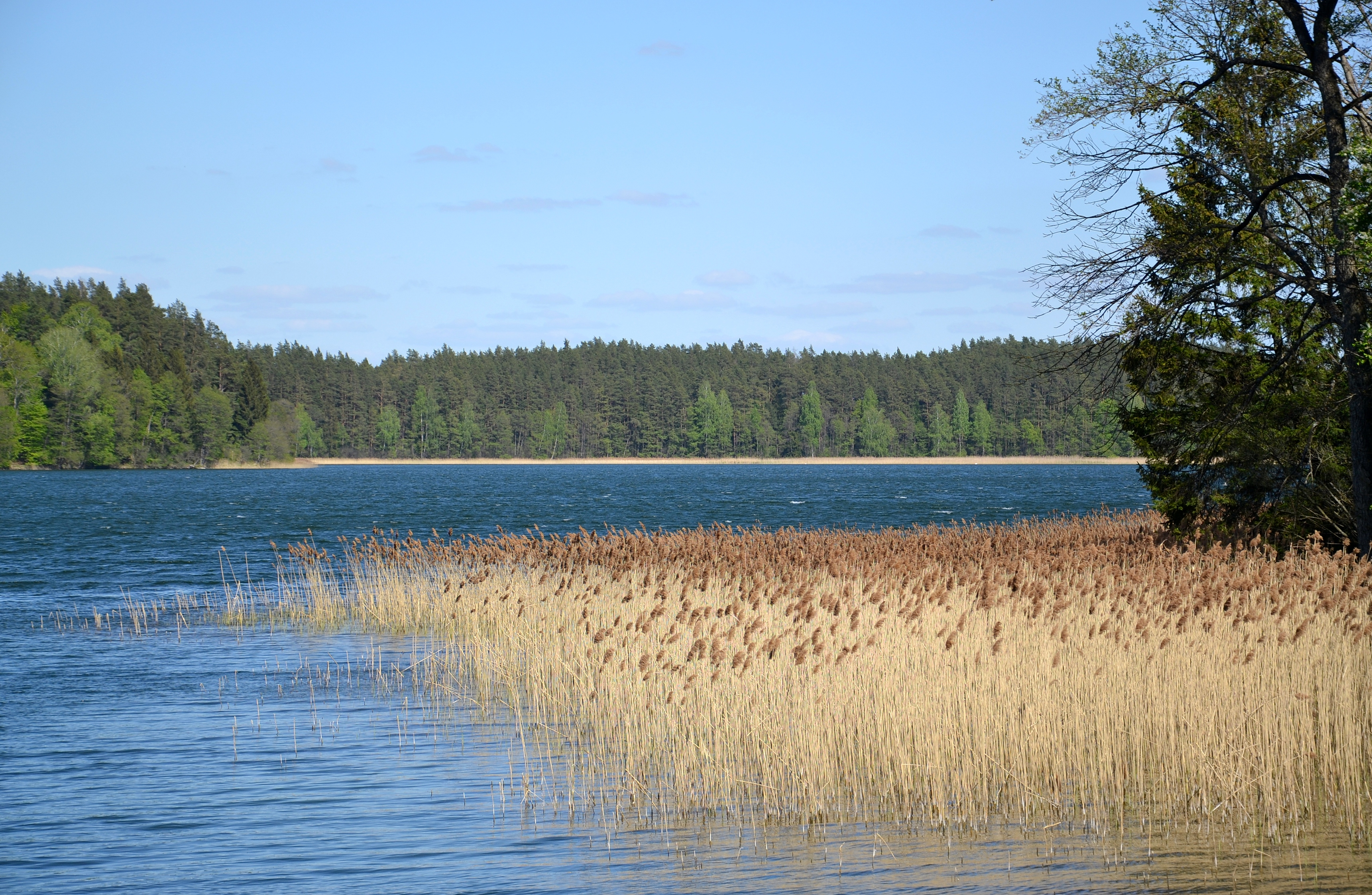
Lake Wigry is located in the Wigry National Park in the Suwałki region, close to the Lithuanian and Belarusian borders. It is known for its clear water and irregular shoreline, with numerous peninsulas and smaller bays that break the lake into distinct sections.
Character and Navigation
Because the lake lies within a national park, navigation is subject to restrictions intended to protect the natural environment. Motorised craft have speed limits on most parts of the lake. Sailing and human-powered craft are permitted throughout the main basin. Parts of the lake's smaller connected sections may be closed during breeding seasons.
Wigry is a shallower lake than Solina, and wind can produce a short, choppy sea state relatively quickly on the open central section. The surrounding park landscape is considered one of the more scenic in northeastern Poland.
Practical Notes
The village of Stary Folwark on the western shore of the lake has a kayak and sailing centre. Accommodation is available at a former monastery on the promontory overlooking the main basin. The nearest town is Suwałki, approximately 15 kilometres north. Given the protected status of the lake, visitors should review current regulations from the Wigry National Park administration before sailing.
Hull Maintenance Considerations for Freshwater
Boats kept in freshwater require different maintenance attention than saltwater vessels. Freshwater does not corrode stainless steel fittings or anodes as aggressively, but it supports biological growth differently. Algae can accumulate on hulls left static for extended periods. Antifouling paint formulations differ between salt and fresh water — products designed for saltwater use may not be permitted in freshwater lakes under Polish environmental regulations. Marina operators and chandleries in the Masurian region can advise on currently permitted products.
Boats that travel between the Baltic coast and inland lakes should have their hulls cleaned and inspected before entering freshwater systems to avoid transferring invasive aquatic species. This is a legal requirement in several jurisdictions and is considered best practice regardless of local rules.

