
Sail Handling
Understanding Sail Trim for Beginners
A step-by-step look at how sail shape is controlled through halyard tension, sheet angle, and traveller position.
Read article →A practical reference covering sail trim fundamentals, essential knots, hull maintenance, and the most notable freshwater sailing areas in Poland.

Core Topics
Whether you are preparing for your first season on the water or looking to fill specific gaps in boat handling knowledge, this site organises the fundamentals into focused, readable sections.
How mainsail and jib shape affect speed and balance. Telltales, traveller position, and what to adjust when the boat feels stiff.
The core knots used for mooring, rigging, and on-deck work — bowline, cleat hitch, reef knot, clove hitch, and figure-eight.
Seasonal maintenance routines: antifouling, osmotic blister treatment, deck hardware inspection, and keel bolt checks.
Latest Articles
Sail Handling
A step-by-step look at how sail shape is controlled through halyard tension, sheet angle, and traveller position.
Read article →
Ropework
Five knots every sailor should be able to tie confidently, with notes on when each one is appropriate.
Read article →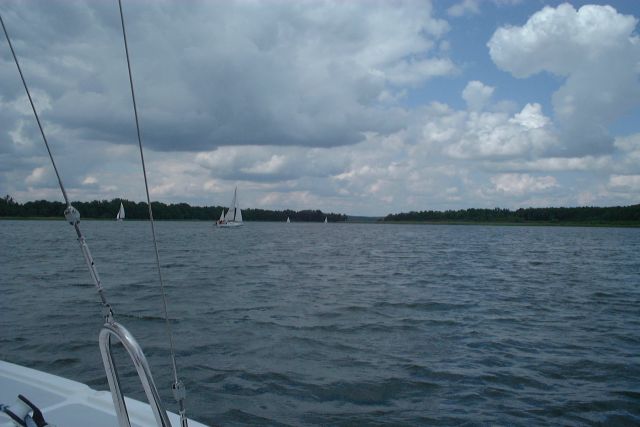
Destinations
An overview of the main sailing areas — the Masurian Lakes, Lake Solina, and Lake Wigry — with practical notes for visitors.
Read article →Poland's Sailing Waters
Poland's northeastern lake district is one of the most extensive inland waterway networks in Central Europe. The Masurian Lakes alone connect over 2,000 individual lakes through rivers and canals, making multi-day passage sailing possible without returning to a marina.
Further south, Lake Solina in the Bieszczady region offers a contrasting environment — a reservoir surrounded by forested hills, with reliable afternoon winds developing across the open basin.

Quick Reference
Regular attention to hull and rigging reduces the chance of failures at sea. The items below represent a basic annual cycle for a small keelboat kept on a freshwater lake.
Inspect keel bolts for corrosion, check standing rigging for broken strands, replace running rigging if worn, apply fresh antifouling below the waterline.
Before each sail: check shroud tension, inspect halyard sheaves, look for chafe on sheets at the fairlead. After heavy weather: inspect cleats and deck fittings.
Drain water systems, remove sails for washing and storage, grease all stainless fittings, cover the cockpit and companionway, support the keel on solid blocks.
Questions about content or corrections to factual details — use the form below.